Monday, October 14, 2013

Peter Molyneux: Monster or Mastermind?


Peter Molyneux is a game developer known for his innovative ideas and his broken promises. Some people believe he is a marvel of gaming and others believe he is a con artist. Let's take a look at Peter Molyneux more closely and see what he has brought to the gaming world.

Even as a child, Molyneux was a devious entrepreneur. At age twelve he started his first business by hiring his sisters to mow people's lawns. Molyneux paid them only $.01 for every $1 he made off of their work. Peter Molyneux started off as a floppy disc salesman. He started to add video games to the floppy disc to improve sales. What he realized was consumers were buying the product not for the floppy discs, but for the games on them. This is where he found an interest in the gaming industry. He created his first text-based game called The Entrepreneur. Although he believed this game would sell tons, only 2 people actually bought the game. With this shortage of sales, Molyneux ended his career with gaming. Or so he thought.

Molyneux started a baked bean shipping company called Taurus. This is where Molyneux is set up for his first lie coming into the gaming industry. Commodore International, a computer selling company, called Molyneux explaining how they heard about his company and were offering him a chance to see their new product. After they took him on a tour, had lunch with him, and showed some of their hardware, Molyneux realized they have mistaken his company, Taurus, for the company Torus. They asked him when the network will be ready and he went with it and told them it would be ready in a couple of months. With this opportunity, Molyneux created a database system called Acquisition and it was moderately successful.


In 1987, Peter Molyneux founded a game development company called Bullfrog. Struggling to develop a game, Peter came up with the idea for Populous, a game where you play as a god.. He said, "Populous was born out of my incompetence as a programmer." Which couldn't be more true. He didn't know how to make the game automatically flatten land for the villagers, so he decided to make it a gameplay mechanic. Players had to flatten the land themselves. This one of Molyneux s most innovative ideas for gaming.. Electronic Arts offered to publish the game and it was released in 1989 and was a big hit. He then released Powermonger, Populous II, and Magic Carpet. All of which winning many awards and becoming more popular. He decided to leave Bullfrog to start a new company so he can go back to programming.


Lionhead Studios was founded by Peter Molyneux in 1997. Their first game in development was Black and White. A game where you play as a god that has the choice of being good or evil. It was the same ideas as Populous but moral ambiguity was emphasized in the creation of this game. When it hit the shelves, it became another huge success. It even made it into the Guinness's Book of World Records as the smartest artificial intelligence. He moved on to making a series called Fable. This series was considered a disappointment for many of Molyneux s fans. He claimed there would be so many new innovated ideas in the RPG game and many of them were not met to the expectations of the gamers. This started happening with each Fable to come out up to fable: The Journey.


During an E3 conference, Molyneux introduced a tech demo for the Kinect called Milo. The game was suppose to have an AI that interacts with absolutely anything you do or say. This unfortunately wasn't the case for what the Kinect was actually capable of. Fable: Journey was said to have the same amount of interaction as the Milo tech demo. This game was yet another disappointment for the fans of Molyneux.
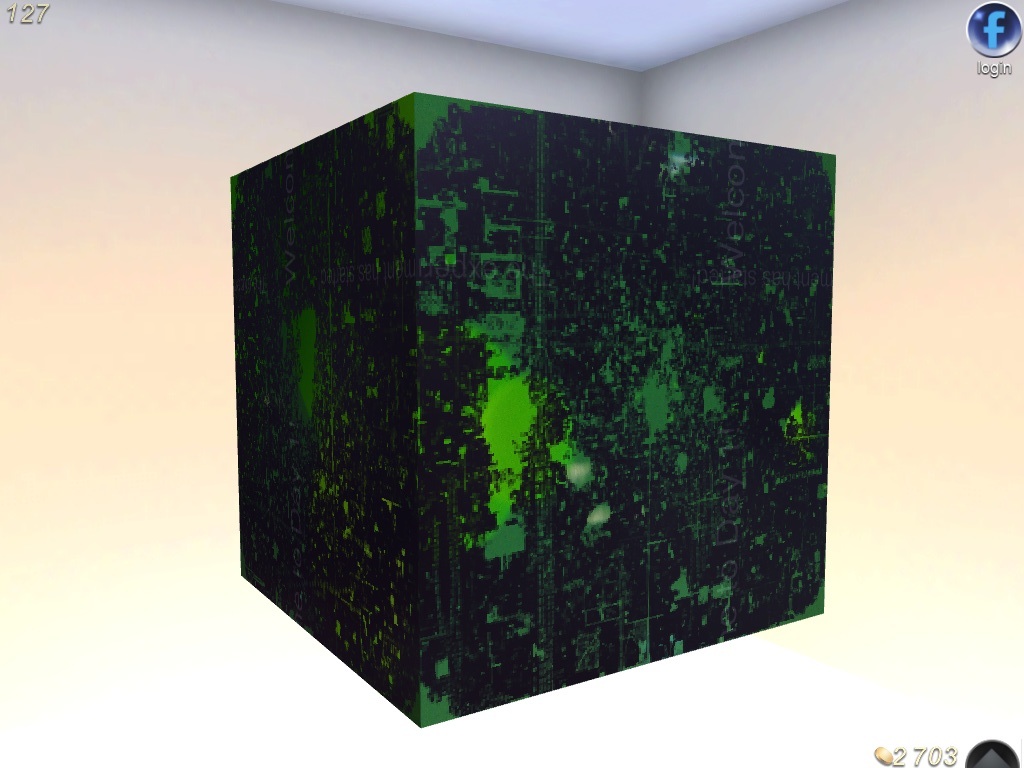

He left Lionhead Studios to make yet another game developing company. This one is called 22Cans. They released an experimental game called "Curiosity – What's Inside the Cube?" The gameplay was simply clicking the screen to remove cubes until one player reaches the middle. Molyneux promised there would be something in the box that was life changing. People spent countless hours picking away at the block . A person finally reached the middle and was revealed a video to which he chose to share with the world. In the video Molyneux reveals that the person who clicked the last box will become the god above all players in the new game Godus and will receive a portion of the profit made from the game itself. This may have been life changing for the one who was lucky enough to reach the middle, but it was a disappointment to everyone else who put their share of work removing the boxes hoping to get to the middle.


With his new game, Godus, releasing soon, gamers aren't quite sure whether it will be a innovative gaming marvel, or if it will be another big disappointment. Although his recent games did not live up to player expectation, maybe with this game going back to the roots of what made him great will win back the fans' trust.

Monday, October 7, 2013

The Difficulty in Space Invaders, Galaxian, and Galaga

by: Zippynom

            The early days of popular gaming were in the arcade. Here, difficulty was money. The more difficult a video game was, the more coins players would spend to try again. The majority of video game developers would make design decision that made video games more difficult to play and easy to try again. Usually a player would start with a few lives and play to the end of a number of levels. They could get a high score from points won by defeating enemies or collecting bonuses. After a player lost all their lives they would often be asked whether they would like to insert more coins to start again, sometimes retaining their current progress. Players were encouraged to get better at the game itself so they didn't have to spend so many quarters to beat a game or get a higher score.
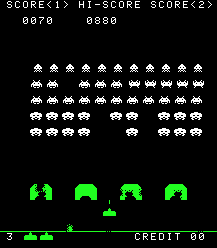
            Space Invaders was developed by Midway Games and in arcades by 1978. It was one of the earliest games to be released on a large scale and quickly became very popular. The gameplay of Space Invaders was relatively simple. The player would control a ship that could move side-to-side near the bottom of the screen. The player had to shoot upwards at the invading aliens whom would slowly shimmy down to the bottom of the screen. If they reached the bottom, the game was over. The challenge was in the player lining up the shot so it would hit an alien. Only one bullet could be on the screen at a time, so the player could shoot aliens closer to the ground more quickly, however a miss would cost time that could otherwise be spent shooting more aliens. As more invaders were shot down the others became faster. There were 55 aliens per level, and each level was the same except for the aliens being a little faster. Aliens gave between 30-50 points per kill. Occasionally a difficult to hit bonus ship would fly across the very top of the screen. If the player could hit it it would give 50-300 points. 1,500 points gave an extra life. Four bunkers stood between the player and the aliens that would block both the player and alien's bullets. These bunkers gave the player some cover and would take damage over the course of a game until they were destroyed. A common strategy was to shoot a small hole through a bunker and hit the aliens through it. Space Invaders was a relatively easy game as long as the player could kill the final few aliens of a wave quickly, before they become too fast. Space Invaders was the simple foundation that the following successors would be built on.

            Galaxian was released by Namco to Japanese arcades in 1979. It improved on its predecessor Space Invaders in many ways. It had color and the enemies moved in more advanced patterns. As in Space Invaders the player would shoot up from the bottom of the screen at enemies that fell from the top of the screen. What was most obviously changed were the losing conditions. Instead of moving slowly down the screen, the enemies would drop bombs and make suicide runs against the player, whom would lose lives when destroyed. This was definitely an improvement of gameplay, as the player now had more direct control over a loss. Though the difficulty in Space Invaders had been limited to the speed of enemies and the rate at which they fired, now Galaxian's enhanced software and hardware allowed for enemies to literally behave more aggressively at higher levels throwing more bombs and moving faster. One hit would kill an enemy, and one enemy bomb or collision would kill the player. Enemies were worth 30-100 points, depending on their height in formation, while command ships were worth a most 800 points. This time it took 7,000 points to get an extra life. Once again only one of the player's bullets could be on the screen at a time, and a miss still cost valuable time. Galaxian, without the defensive bunkers or predictable enemies of Space Invaders, is arguably more difficult than its predecessor. It requires more precise timing and aiming of a shot than Space Invaders due to its speed and the diagonal paths of the enemies.

            Galaga was the successor to Galaxian and it again enhanced the Space Invaders formula in almost every way. Enemies were once again faster and smarter, and there were more of them. At the beginning of each level the enemies would file in from the top of the screen rather than just appearing from nowhere. This gave the player time to pick off a few enemies, but sometimes a few enemies would unexpectedly fly right at the player. Levels were much more dynamic. Enemies would travel in different paths depending on the position of the player, spinning and whirling in space. They would often dive at just the right time to catch the player off guard or attack from the side where the player could not shoot them. After a certain number of levels there would be a bonus level where the game changed the rules a little. Instead of a horde of enemies assembling in formation and making strikes at the player, a bonus level would have the player shooting at enemies while they buzzed around the screen in various patterns. If the player could shoot all of them before they left the screen they were rewarded extra points. The most interesting difficulty mechanic in Galaga, however, involved the sacrifice of one of the player's lives. An enemy command ship had the unique ability to capture the player's ship. The captured ship then became an enemy for the player's next life. If the player could destroy that enemy command ship they could get their old ship back in the form of an attachment to their current one that would fire two bullets at once!

            Galaga can be considered more difficult and complex than both of its previous iterations, and it handled that difficulty very well. The concept of risk is reflected throughout the game. The player, after losing their ship to the commander, was now pressured to be skillful enough to retrieve the lost ship. Enemies are worth more points if you shoot them while they are traveling down to attack you and the player had a chance to shoot some enemies while they got into formation at the beginning of a level if they could dodge the kamikaze ones. Finally, the bonus levels gave the player a chance for more points if they were skillful enough. Galaga is a great example of difficulty handled well.

Sunday, October 6, 2013

Pokemon X&Y Preview


Pokemon X & Y are the newest installations to the video game series of Pokemon. They will be coming to the 3DS on October 12th. These games take place in the 6th generation of Pokemon and will include over 40 new pokemon plus the ones from the past generations. This game will be the first handheld pokemon game to have full 3D gameplay.


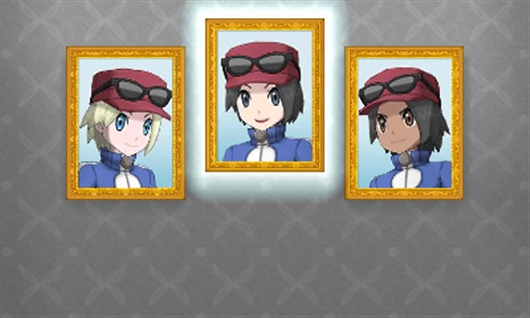
A new feature added to the game is the ability to customize your character. You will start out being able to choose a boy or girl, skin tone, and the outfit your character will wear. Throughout the game players will be able to buy additional accessory to change their characters style.

Another new feature is Mega Evolutions. A player will recieve a stone that can be given to a few select pokemon. This will allow players to mega evolve certain pokemon once per battle to make them more powerful. This evolution will also cause the pokemon to change their type. Some mega evolutions differ between X & Y.


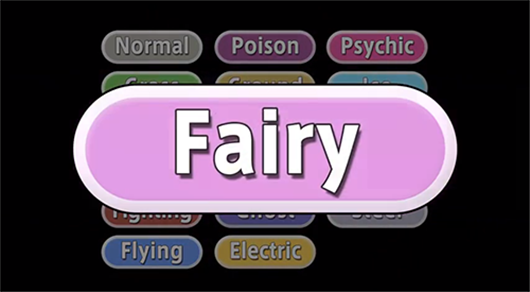
A new type of pokemon was added to this generation. It is the Fairy type. They are strong against dragon, fighting, and dark. They are weak against fire, steel, and poison.


Throughout Pokemon X and Y, there are mini games where you can interact with your pokemon such as petting them and feeding them causing them to like you even more. The more your pokemon likes you the more effective they will be in battle. You can also train your pokemon's stats through mini games.

With only a week until the game releases, fans are getting really excited for what the next generation of Pokemon can bring to gaming. Which version are you going to buy? Write below in the comments.

Wednesday, October 2, 2013

Half-Life 3 Confirmed!


Valve filed an Intent to Use trademark for the title Half-Life 3 on September 29th of this year. According to some research done by reddit, Valve must use this trademark within 3 months unless they get a 6 month extension. They can only extend the trademark 5 times until they must use it. If this is the case, gamers will see the release of Half-Life 3 within the next 2.5 years.

Tuesday, October 1, 2013

GTA Online's Day One Technical Issues


Released today was the highly anticipated GTA Online. As expected, the servers are failing due to technical issues. Some players may experience a message popping up saying "Cloud servers are unavailable.", the game freezing after starting their first race, match making timeout notifications, or other bugs in the game that prevent them from playing. Rockstar is currently working on these issues to ensure the game is available to play for everyone. A rockstar employee stated an apology on their website saying
"We apologize for any inconvenience and thank you for your patience while we work to resolve this."
Hopefully the game will be playable soon so that we can all enjoy the online experience and join it's community.

Sunday, September 29, 2013

Steam Universe Details


Over the past week, Valve made 3 announcements based around playing Steam games in the living room. First they announced Steam's new operating system. SteamOS is a Linux based system that is centered around streaming games to the TV using a gamepad. Along will the easy access to video games, the OS will allow users to access movies, TV, and music. Another feature tied in SteamOS is the ability to share your games with your family. A game can only be played by one person at a time but the person playing is able to keep their own saves and earn their own achievements.


The second announcement released by Valve was the Steam Machine. Valve is collaborating with many different companies to create a variety of Steam Machines to stream games, music, and videos from the computer to the television through Steam. Each Steam Machine will have different specifications to fit the consumer's preferences.


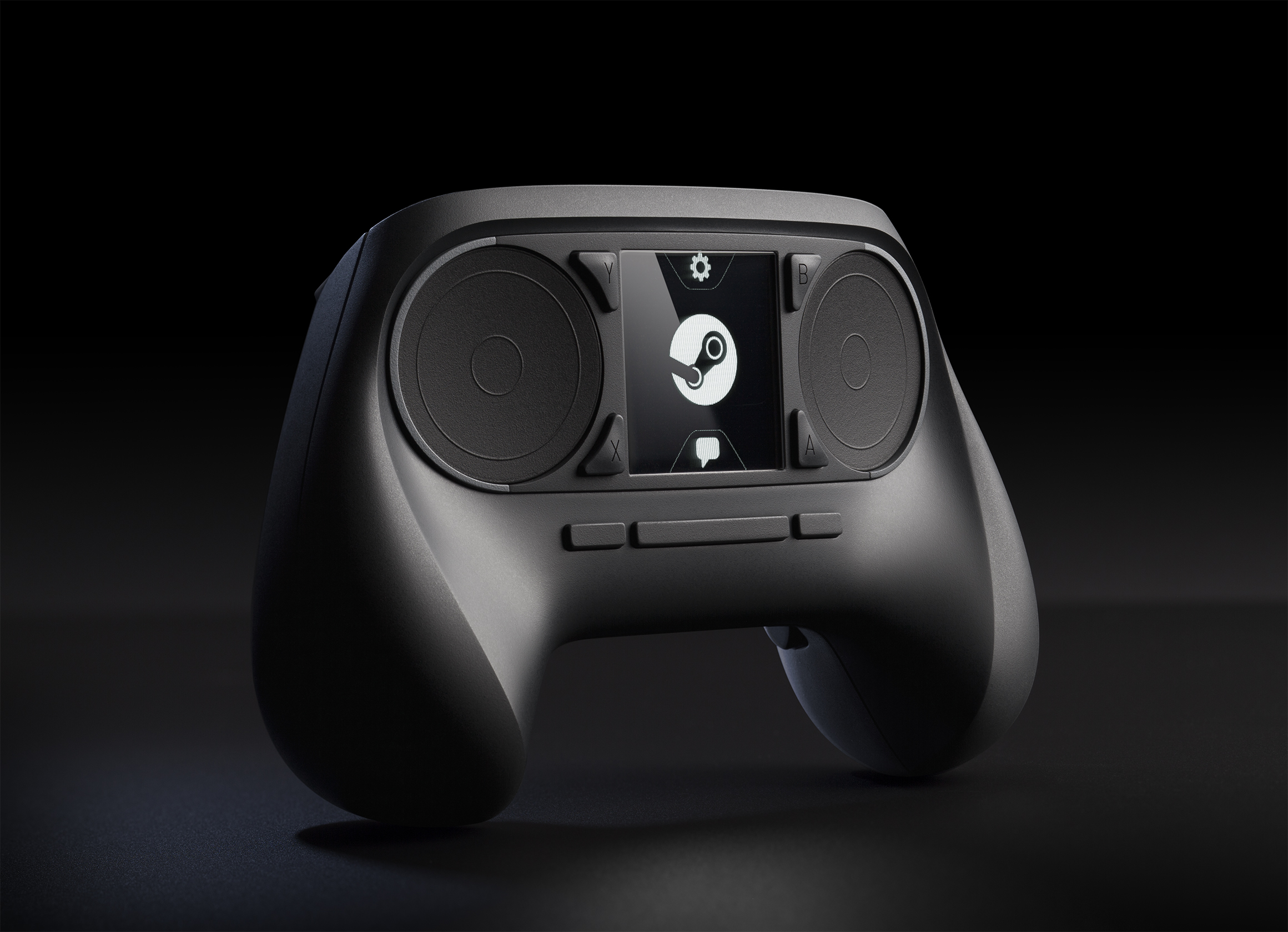
The final thing Valve announced was their new Steam Controller. The controller is meant to support any game that is currently and will be available on Steam, including the games without controller support. It has 2 track pads that are designed for high performance feedback. It was created to be easily modded to enhance the users experience. This controller is a big change from the usual console gamepads, Although players may not be comfortable using it at first, this may be the future of gaming controllers.


With all these new announcements from valve, i am personally excited to see what they can do. I'm hoping for Valve to someday release a handheld PC that allows you to access Steam games on the go. Write in the comments what you think of the Steam Universe and what you feel Valve should do next. (Other than Half-Life 3.)

Sunday, September 22, 2013

Grand Theft Auto V - First impression.

By PRVMALONE

Let's start off with the word "wow." Rockstar promised a great game and they certainly didn't disappoint. The graphics have been updated, but I don't give a crap about graphics. The gameplay thus far has been flawless, after I turned off the aim assist of course. Driving in GTA V is much more fluid and manageable than in Rockstar's previous GTA titles, and with the addition of a driving super ability for one of the characters it's much more fun than driving Roman's cab around Liberty City for thirty missions.

The game starts you off in the middle of a mission, which is an interesting take. The missions following the first are some what like GTA IV, but Rockstar include inside jokes at every turn about this. It isn't long before the missions become completely different than any of the GTA games.


Remember the crappy stranger missions in GTA IV? If you don't they sucked. Well they're back in GTA V but with a twist-- the twist is that they don't suck. You'll find yourself in a park with a man trying to give you weed, outside celebrities houses trying to get a compromising picture, or using a tow truck to help out a cracked out neighbor. At points the game is as outrageous as the Saints Row series, but it pulls you back in before you become the leader of the free world.

The story content is great as well. You'll hear of the Liberty City adventures, and you may even meet some familiar faces along the way. It's hard not to spoil anything because there is just so much to talk about. But I'm certain our head writer, Jammage, will discuss the game further in due time. For now, just know that this game has so much to offer, and I'm only three hours in.

GTA V has been granted the PRVMALONE seal of approval